Search
ILIA STATE UNIVERSITY
The program was developed in 2022 and is subject to periodic updates.
The program aims to prepare highly qualified civil engineering specialists equipped with broad theoretical knowledge and relevant practical engineering skills. It also develops students’ professional skills for successful careers, enabling them to contribute to public well-being, quality of life and improvements to the built environment.
Mission of the Program: The mission of the Civil Engineering at Ilia State University is to prepare our students for careers in their chosen area of specialisation. As such, the program aims to provide quality instruction, advisory services and student support to ensure students achieve their goals and gain the knowledge and experience required to succeed in the demanding field of civil engineering.
The Program Educational Objectives of the Civil Engineering program are closely aligned with Ilia University’s mission of advancing science to the benefit of society locally and internationally. This is especially true in a people serving profession such as civil engineering which is entirely focused on bettering the standard of living of society at large. With an internationalised focus and teaching in English language with the aim to involve both local and international students in the program, we hope for a high level of internationalisation and future cooperation between the graduates across borders.
This program focuses on the delivery of interdisciplinary courses to create well rounded holistic thinkers, problem solvers and future leaders in the civil engineering fields of water, transport, structural and geotechnical engineering. To complement the interdisciplinary learning promoted by this program, students will have the ability to take business administration courses to acquire managerial skills that are instrumental to a successful professional career.
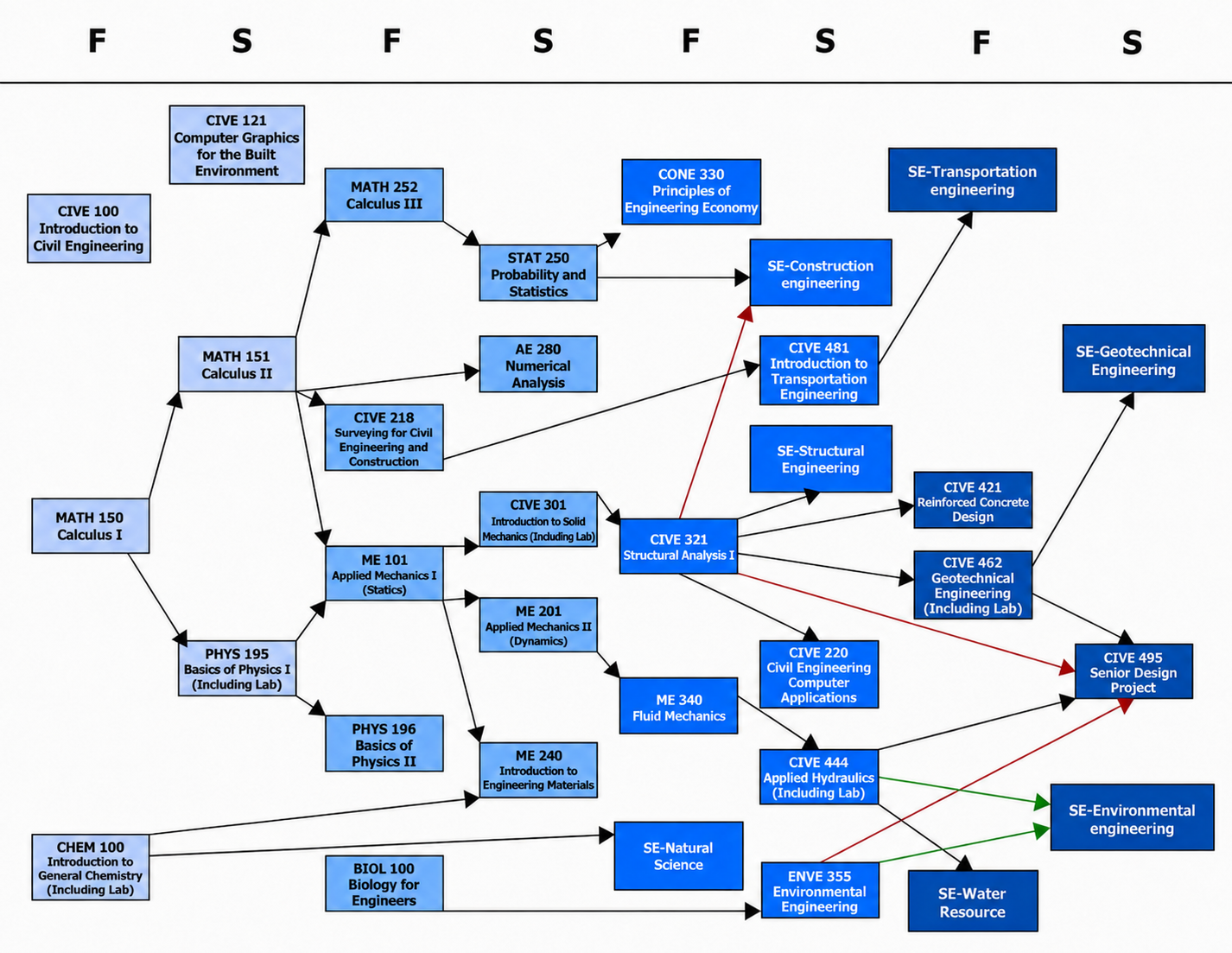
Within the programme, fundamental courses in maths, physics, chemistry and additional natural science electives build to later courses in engineering design. The program is structured to ensure adequate incremental practical and theoretical knowledge in the field of Civil Engineering. Programme graduates will be competitive professionals in Georgia or abroad in areas of project and engineering design and management.
They will also be able to continue their education at the master level of studies. In addition, the programme is oriented towards the development of transferable skills such as effective oral and written communication in at least one other non-native speaking language so as to develop multicultural awareness. We expect that our graduates will use these skills in whichever sector they consider advancing their careers, whether it be in the private, government or educational sector.
Program Educational Objectives: Graduates of the Ilia University Civil Engineering Program will meet the following Program Educational Objectives: PEO 1: Graduates apply fundamental and advanced civil engineering knowledge to analyze, design, and manage engineering projects in accordance with national and international standards. PEO 2: Graduates establish professional practice as civil engineers in national or international settings or pursue advanced graduate studies, demonstrating continuous professional development and adaptability to evolving industry needs.
PEO 3: Graduates perform effectively as practicing civil engineers in industry or public agencies, demonstrating professional responsibility, effective communication, and the ability to work independently and in multidisciplinary teams.
The Civil Engineering program enables graduates to develop the following abilities:
All students enrolled in the Bachelor’s Program are required to complete 256 ECTS credits in order to be awarded a Bachelor’s degree in Civil Engineering. Structure of Civil Engineering Bachelor Program: * Maths, Physics and Chemistry – 66 ECTS (Including 6 ECTS elective from Natural Science) * General Education – 48 ECTS (including 6 ECTS of elective from business administration;) * Major program – 142 ECTS (including 30 ECTS of electives) Maths, Physics and Chemistry Foundation Courses: 66 ECTS of Foundation Maths, Physics and Chemistry with associated laboratories ensures a good base for continued advanced learning for our civil engineering students.
General Education: General Education includes courses (48 ECTS) in line with the philosophical direction of Ilia State University including business administration and management and finance module, Practical Course of Georgian for Foreigners / Practical Course of German/English – 24 ECTS * * International students must pass both Practical Courses of Georgian; local students must pass Practical Courses of German or English language.
Major Program: * Mandatory courses of Civil Engineering Bachelor program – 112 ECTS (including 6 design ECTS) * Mandatory/elective courses Civil Engineering Bachelor Program – 30 ECTS Mandatory/elective course choices: Students choose four courses from the following six areas (no more than 1 in each area – this ensures a broad knowledge base that can be further specified in graduate studies).
7. Water Resourse Engineering 8. Transportation Engineering 9. Structural Engineering 10. Geotechnical Engineering 11. Environmental Engineering 12. Construction Engineering Capstone Design Project: During the last semester of study, students must participate in a Senior Capstone Design Project (6 ECTS). The main purpose of the design experience is to prepare students for the real-world challenges in the field of Civil Engineering by exposing them to industry and allowing them to use their developed problem-solving skills to find engineering design solutions to industry problems.
The students will also develop their managerial skills through planning, design and meeting deadlines together with industry participation. Finally, students will improve their communication, presentation and teamwork skills during these practical components of the programme.
Applicants must pass the Unified National Examinations and meet the program’s minimum competency thresholds:
● Lectures and Seminars/Written and verbal method; ● Laboratory Work; ● Practical Work; ● Project Work Individually and in Teams. Note: Specific teaching methods are identified for each individual program component and are listed in relevant syllabi.
Graduates can work in:
Graduates may also continue their education at Master’s level.
| Academic Year | 2023-2024 | 2024-2025 | 2025-2026 |
| Number of Enrolled Students | 8 | 10 | 17 |
Vanda Pirtskhaladze
Quality Assurance Specialist, School of Technology
➳ 3/5 Chavchavadze Avenue, Building B
☏ (+995 32) 222 00 09 (131)
✉ vanda.pirtskhaladze@iliauni.edu.ge
Ana Tchrelashvili
Study Process Coordinator of Digital Technologies Programs
➳ 45 Ilia Chavchavadze Avenue, room T207
☏ (+995 32) 222 00 09 (276)
✉ ana.tchrelashvili@iliauni.edu.ge
The program was developed in 2019 and is subject to periodic updates.
The program prepares highly qualified engineering specialists, focusing on water resources engineering, structural and geotechnical engineering, and transportation engineering.
Ilia State University’s Civil Engineering program prepares students for careers in their chosen specializations through quality teaching, advisory services and student support, helping them gain the knowledge and experience needed to succeed in this demanding field.
The program’s educational objectives are closely linked to the University’s mission to create, transmit and apply new knowledge for the benefit of local and international society. Civil engineering focuses on improving society’s quality of life. The program’s international focus and participation of international staff and students support a high degree of internationalization.
Mission of the Program: The mission of the Civil Engineering at Ilia State University is to prepare our students for careers in their chosen area of specialisation. As such, the program aims to provide quality instruction, advisory services and student support to ensure students achieve their goals and gain the knowledge and experience required to succeed in the demanding field of civil engineering.
The Program Educational Objectives of the Civil Engineering program are closely aligned with Ilia University’s mission of advancing science to the benefit of society locally and internationally. This is especially true in a people serving profession such as civil engineering which is entirely focused on bettering the standard of living of society at large. With an internationalised focus and teaching in English language with the aim to involve both local and international students in the program, we hope for a high level of internationalisation and future cooperation between the graduates across borders.
This program focuses on the delivery of interdisciplinary courses to create well rounded holistic thinkers, problem solvers and future leaders in the civil engineering fields of water, transport, structural and geotechnical engineering. To complement the interdisciplinary learning promoted by this program, students will have the ability to take business administration courses to acquire managerial skills that are instrumental to a successful professional career.
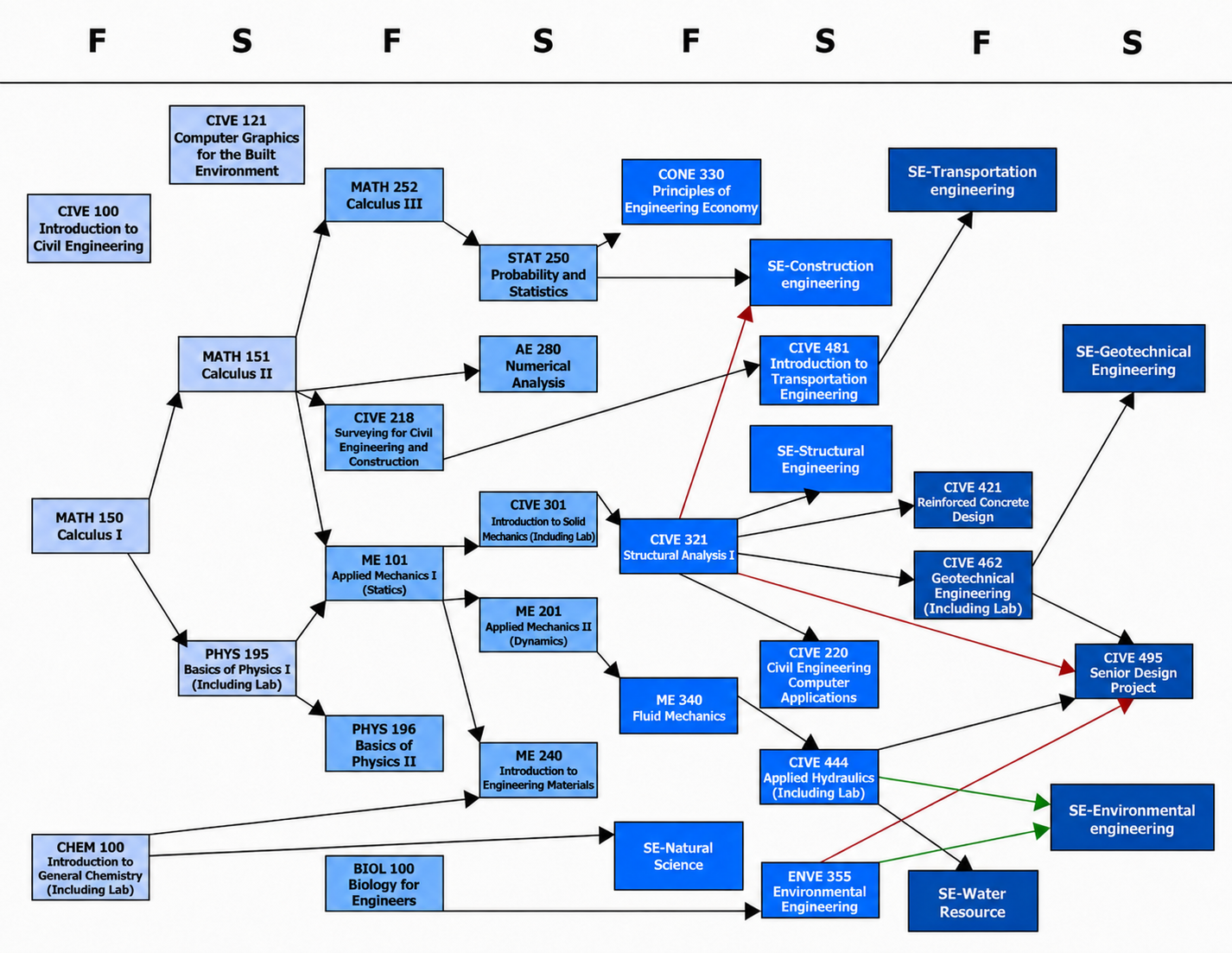
Within the programme, fundamental courses in maths, physics, chemistry and additional natural science electives build to later courses in engineering design. The program is structured to ensure adequate incremental practical and theoretical knowledge in the field of Civil Engineering. Programme graduates will be competitive professionals in Georgia or abroad in areas of project and engineering design and management.
They will also be able to continue their education at the master level of studies. In addition, the programme is oriented towards the development of transferable skills such as effective oral and written communication in at least one other non-native speaking language so as to develop multicultural awareness. We expect that our graduates will use these skills in whichever sector they consider advancing their careers, whether it be in the private, government or educational sector.
Program Educational Objectives: Graduates of the Ilia University Civil Engineering Program will meet the following Program Educational Objectives: PEO 1: Graduates apply fundamental and advanced civil engineering knowledge to analyze, design, and manage engineering projects in accordance with national and international standards. PEO 2: Graduates establish professional practice as civil engineers in national or international settings or pursue advanced graduate studies, demonstrating continuous professional development and adaptability to evolving industry needs.
PEO 3: Graduates perform effectively as practicing civil engineers in industry or public agencies, demonstrating professional responsibility, effective communication, and the ability to work independently and in multidisciplinary teams.
The Civil Engineering program enables graduates to develop the following abilities:
All students enrolled in the Bachelor’s Program are required to complete 252 ECTS credits in order to be awarded a Bachelor’s degree in Civil Engineering Structure of Civil Engineering Bachelor Program: * Maths, Physics and Chemistry – 66 ECTS (Including 6 ECTS elective from Natural Science) * General Education – 44 ECTS (including 6 ECTS of elective from business administration; 8 ECTS Management and Finance for future engineers Module) * Major program – 142 ECTS (including 30 ECTS of electives) Maths, Physics and Chemistry Foundation Courses: 66 ECTS of Foundation Maths, Physics and Chemistry with associated laboratories ensures a good base for continued advanced learning for our civil engineering students.
General Education: General Education includes courses (44 ECTS) in line with the philosophical direction of Ilia State University including business administration and management and finance module, Practical Course of Georgian for Foreigners / Practical Course of German/English – 12 ECTS * * International students must pass both Practical Courses of Georgian; local students must pass Practical Courses of German or English language.
Major Program: * Mandatory courses of Civil Engineering Bachelor program – 112 ECTS (including 6 design ECTS) * Mandatory/elective courses Civil Engineering Bachelor Program – 30 ECTS Mandatory/elective course choices: Students choose four courses from the following six areas (no more than 1 in each area – this ensures a broad knowledge base that can be further specified in graduate studies).
1. Water Resourse Engineering 2. Transportation Engineering 3. Structural Engineering 4. Geotechnical Engineering 5. Environmental Engineering 6. Construction Engineering Capstone Design Project: During the last semester of study, students must participate in a Senior Capstone Design Project (6 ECTS). The main purpose of the design experience is to prepare students for the real-world challenges in the field of Civil Engineering by exposing them to industry and allowing them to use their developed problem-solving skills to find engineering design solutions to industry problems.
The students will also develop their managerial skills through planning, design and meeting deadlines together with industry participation. Finally, students will improve their communication, presentation and teamwork skills during these practical components of the programme.
● Lectures and Seminars/Written and verbal method; ● Laboratory Work; ● Practical Work; ● Project Work Individually and in Teams. Note: Specific teaching methods are identified for each individual program component and are listed in relevant syllabi.
Graduated students can be employed in a variety of organizations related to planning, design, construction, management, maintenance, repair and renewal of infrastructure components such as building, transportation, energy and water systems. The employment scope can include: * Construction management and engineering design of houses and industrial buildings; * Transportation construction and asset management of roads and railways with associated tunnels and bridges, Traffic analysis and transportation planning; * Water supply, sewerage, wastewater treatment and reservoirs design and construction; * Inspection and assessment of existing buildings and strengthening of them; * Public Enterprises such as Municipalities, and government owned infrastructure companies; * Diagnostics and repair of a wide range of engineering equipment (household, medical, military, etc.
); * Renewable energy systems design and construction management.
| Academic Year | 2021-2022 | 2022-2023 | 2023-2024 | 2024-2025 | 2025-2026 |
| Number of Enrolled Students | 3 | 12 | 3 | 11 | 9 |
| Citizens of Georgia | 2 | 11 | 2 | 7 | 6 |
| International Students | 0 | 1 | 1 | 4 | 3 |
| Academic Year | 2021-2022 | 2022-2023 | 2023-2024 | 2024-2025 | 2025-2026 |
| Degrees Awarded | 5 | 4 | 13 | 8 | 9 |
Vanda Pirtskhaladze
Quality Assurance Specialist, School of Technology
➳ 3/5 Chavchavadze Avenue, Building B
☏ (+995 32) 222 00 09 (131)
✉ vanda.pirtskhaladze@iliauni.edu.ge
Ana Tchrelashvili
Study Process Coordinator of Digital Technologies Programs
➳ 45 Ilia Chavchavadze Avenue, room T207
☏ (+995 32) 222 00 09 (276)
✉ ana.tchrelashvili@iliauni.edu.ge